
Pneumatic and Compressed Air Plumbing
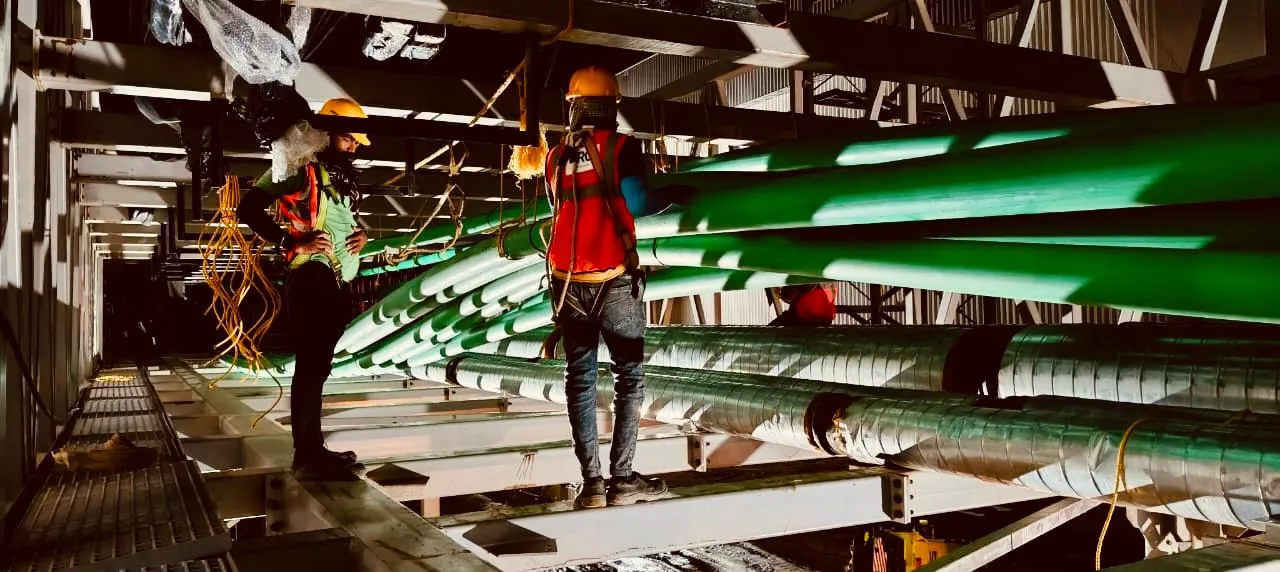
Pneumatic pipes are specialized piping systems for transporting compressed air or other gases in industrial applications. They form the backbone of automated manufacturing, packaging plants, assembly lines, and industrial processes where compressed air powers machinery and tools.
These pipes are constructed from metal, plastic, or composite materials — most commonly polyethylene tubing, hose systems, and tube systems. Material choice depends on operating pressure, temperature, environmental conditions, and gas type.
Pneumatic pipes are widely used in vehicle production, manufacturing plants, pharmaceutical clean rooms, food packaging, and electronics manufacturing. They power cylinders, valves, actuators, and air tools.
Available in various sizes and forms, pneumatic pipes can be rigid or flexible, easily adjustable, or custom-designed. They adapt to new installations and retrofits — from point-of-use connections to complex multi-branch networks spanning entire factories.
Key Services
Pneumatic & Compressed Air Plumbing Systems are engineered to provide safe, efficient, and reliable compressed air distribution for industrial, commercial, and manufacturing applications. Designed for consistent pressure delivery, these systems help improve operational efficiency while reducing energy losses.
- Compressed Air Distribution
Reliable transportation of compressed air from compressors to workstations, machinery, and production lines.
- Industrial Pneumatic Systems
Efficient air supply networks for pneumatic tools, actuators, valves, and automation equipment.
- Manufacturing Facilities
High-performance compressed air piping solutions for factories, workshops, and production plants.
- Automation & Control Systems
Clean and consistent air delivery for automated machinery and process control applications.
- Assembly & Processing Lines
Dependable air distribution systems supporting assembly operations and manufacturing processes.
- Utility Air Networks
Centralized compressed air infrastructure for commercial and industrial facilities.
Why Choose Pneumatic & Compressed Air Plumbing Systems
Compressed air is often referred to as the “fourth utility” in industrial operations. A well-designed piping system ensures maximum efficiency, minimal pressure loss, and long-term reliability.
01
Low Pressure Drop
Smooth internal surfaces minimize friction losses, ensuring consistent air pressure throughout the network.
02
Corrosion-Free Performance
Advanced piping materials eliminate rust and contamination commonly associated with traditional metal air lines.
03
Leak-Proof Connections
Precision-engineered joints help reduce air leakage and improve energy efficiency.
04
Lightweight Installation
Easy-to-handle piping systems reduce installation time and labor costs.
05
Energy Efficient Operation
Optimized airflow characteristics help reduce compressor workload and operating costs.
06
Long Service Life
Durable construction ensures dependable performance in demanding industrial environments.
Key Features & Benefits
| Feature | Benefit |
|---|---|
| Smooth Internal Bore | Reduces pressure loss and improves airflow efficiency |
| Corrosion-Free Material | Prevents rust contamination in compressed air systems |
| Leak-Resistant Jointing | Minimizes air leakage and energy waste |
| Lightweight Construction | Faster installation and easier handling |
| High Pressure Capability | Suitable for industrial compressed air applications |
| Modular System Design | Easy expansion and modification of air networks |
| Low Maintenance Requirements | Reduces downtime and maintenance costs |
| Chemical & Moisture Resistance | Protects system integrity in industrial environments |
| Durable Construction | Withstands demanding operating conditions |
| Long Service Life | Reliable long-term performance |
Installation Advantages
| Feature | Benefit |
|---|---|
| Lightweight Components | Faster installation and handling |
| Modular System Design | Easy future expansion |
| Quick Connection Technology | Reduced installation time |
| Minimal Pressure Loss | Improved system efficiency |
| Low Maintenance Requirements | Reduced operational costs |
| Flexible Routing Options | Simplified plant layout integration |
Applications
| Industry | Application |
|---|---|
| Manufacturing Plants | Compressed air distribution systems |
| Automotive Industry | Pneumatic tools and assembly lines |
| Textile Industry | Air-operated machinery and equipment |
| Food & Beverage | Utility air distribution systems |
| Pharmaceutical Facilities | Pneumatic control systems |
| Engineering Workshops | Compressed air tool networks |
| Packaging Industry | Automated pneumatic equipment |
| Electronics Manufacturing | Precision pneumatic applications |
| Warehouses | Utility compressed air systems |
| Industrial Automation | Pneumatic actuators and control systems |
Technical Specifications
| Specification | Value |
|---|---|
| Application | Pneumatic & Compressed Air Systems |
| Operating Medium | Compressed Air |
| System Pressure | As per application requirements |
| Pipe Sizes | Multiple diameters available |
| Material | Engineered Polymer / Composite / Aluminum Systems |
| Jointing Method | Mechanical, Compression, or Push-Fit Connections |
| Corrosion Resistance | Excellent |
| Surface Finish | Smooth Internal Bore |
| Installation Type | Surface Mounted & Overhead Networks |
| Service Life | Long-term industrial performance |
Product Range
Compressed Air Pipes
| Product Type | Application |
|---|---|
| Pneumatic Air Pipes | General compressed air distribution |
| High-Pressure Air Pipes | Industrial compressed air systems |
| Aluminum Composite Air Pipes | Energy-efficient air networks |
| Corrosion-Resistant Air Pipes | Moisture-sensitive applications |
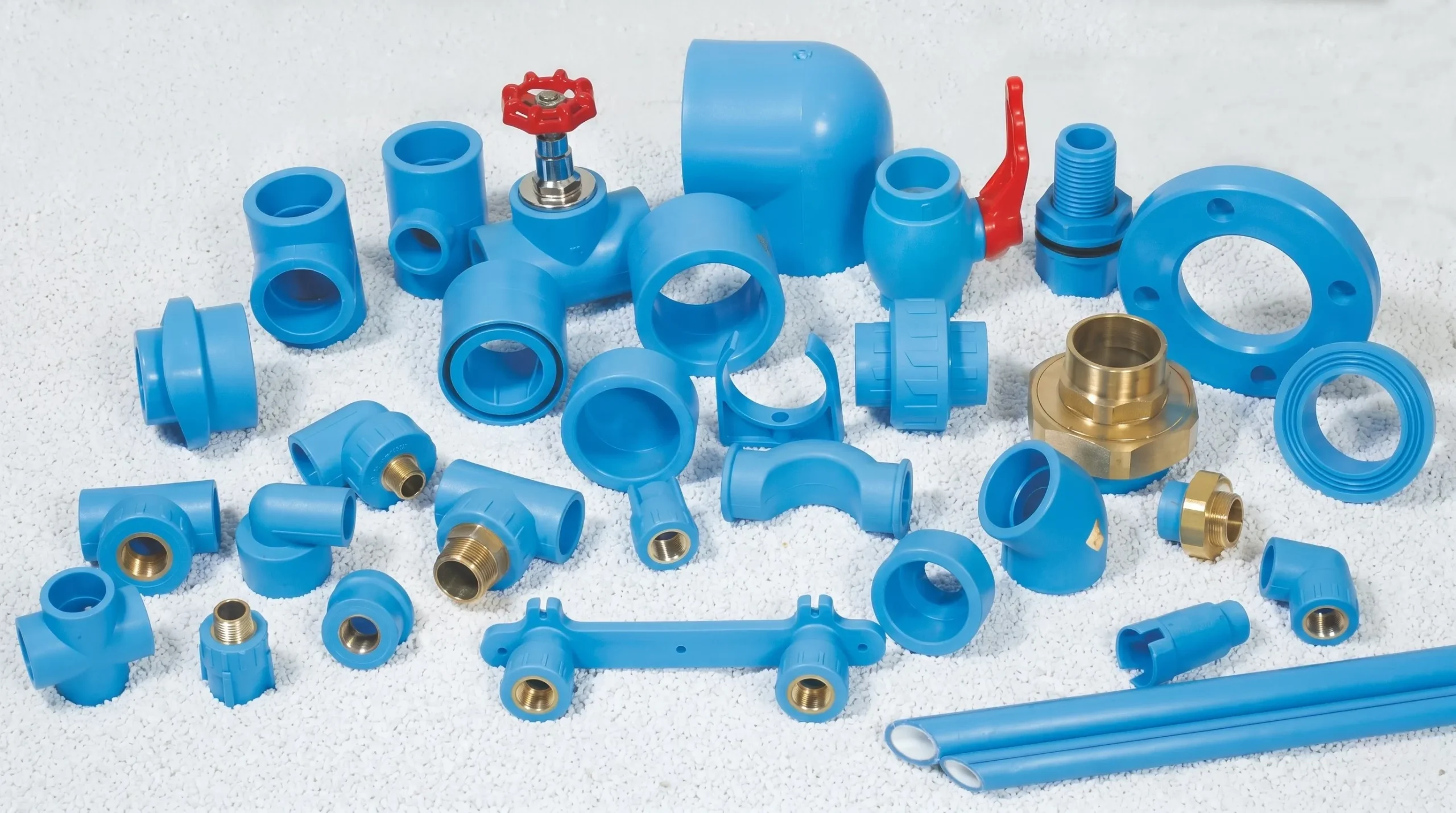
Pneumatic Fittings
| Fitting Type | Purpose |
|---|---|
| Couplers | Straight pipe connections |
| Elbows (45° & 90°) | Direction changes |
| Equal & Reducing Tees | Branch connections |
| Reducers | Pipe size transitions |
| Male Threaded Adaptors | Pipe-to-equipment connections |
| Female Threaded Adaptors | Pipe-to-equipment connections |
| Unions | Easy maintenance and dismantling |
| End Caps | System termination |
| Flange Adaptors | Compressor and equipment connections |
Valves & Accessories
| Product | Application |
|---|---|
| Ball Valves | Flow isolation |
| Air Control Valves | Pressure and flow regulation |
| Drain Valves | Moisture removal |
| Quick Connect Couplings | Fast equipment connection |
| Pipe Clamps & Supports | System support and mounting |
| Air Outlet Stations | Workstation air supply points |
Performance Advantages
- Maximum Airflow Efficiency: Smooth internal surfaces reduce friction losses and maintain consistent airflow throughout the network.
- Reduced Energy Consumption: Lower pressure drops reduce compressor workload, resulting in energy savings.
- Clean Air Delivery: Corrosion-free piping prevents rust particles and contamination from entering pneumatic equipment.
- Leak-Free Performance: Reliable jointing systems minimize compressed air leakage and improve overall efficiency.
- Flexible System Expansion: Modular piping design allows easy future expansion and modifications.
- Reduced Maintenance Costs: Durable materials and corrosion resistance lower maintenance requirements and downtime.
Quality Assurance
| Quality Test | Purpose |
|---|---|
| Raw Material Verification | Ensures product quality and consistency |
| Pressure Testing | Verifies system performance under operating pressure |
| Leak Testing | Ensures airtight connections |
| Dimensional Accuracy Testing | Confirms installation compatibility |
| Joint Integrity Testing | Validates connection reliability |
| Visual Inspection | Maintains manufacturing quality standards |
Standards & Compliance
| Standard Area | Description |
|---|---|
| Industrial Compressed Air Systems | Suitable for pneumatic air distribution |
| Quality Management Practices | Controlled manufacturing processes |
| Industrial Utility Applications | Designed for compressed air networks |
| Performance Testing Requirements | Verified operational reliability |
Residential Contractor
“Altura Crest provided reliable plumbing and bathroom solutions that matched our project requirements perfectly. The product quality and support experience were excellent.”
Agricultural Supplier
“We were looking for dependable irrigation products for agricultural use, and Altura Crest delivered practical solutions with consistent quality and timely support.”
Interior & Project Consultant
“Their range of bathroom and plumbing products combines functionality with modern design. The team was responsive and helpful throughout the process.”

What Our Customers Say About Us
Customers value our practical product range, dependable quality and ability to support different plumbing, bathroom and irrigation requirements.
TESTIMONIALS
Frequently Asked Questions
What is a pneumatic and compressed air plumbing system?
A pneumatic and compressed air plumbing system is a network of pipes, fittings, valves, and accessories designed to safely distribute compressed air from a compressor to various points of use.
What are the benefits of using a dedicated compressed air piping system?
A dedicated system helps improve airflow efficiency, reduce pressure loss, minimize leaks, simplify maintenance, and ensure consistent air delivery throughout the facility.
What applications are compressed air plumbing systems commonly used for?
These systems are widely used in manufacturing plants, workshops, automotive facilities, warehouses, assembly lines, and other environments that rely on pneumatic equipment.
What materials are used in compressed air piping systems?
Compressed air systems can be manufactured from materials such as aluminum, stainless steel, galvanized steel, copper, or engineered polymers, depending on the application requirements.
How do I choose the right pipe size for my compressed air system?
Pipe sizing depends on factors such as airflow demand, operating pressure, pipe length, and the number of connected tools or machines. Proper sizing helps minimize pressure drops.
Can the system be expanded in the future?
Yes. Many compressed air plumbing systems are designed with modular components that allow easy expansion or modification as operational requirements grow.
Is the system suitable for high-pressure applications?
System suitability depends on the product specifications and operating pressure requirements. Always verify the pressure rating before installation.
How can I reduce pressure loss in my compressed air network?
Using properly sized piping, minimizing unnecessary bends, reducing leak points, and maintaining clean air lines can help reduce pressure loss and improve efficiency.
Are the components resistant to corrosion?
Many compressed air plumbing products are designed with corrosion-resistant materials or protective finishes to ensure durability and long service life.
How easy is the installation process?
Many systems feature lightweight components and simple connection methods that help reduce installation time and labor requirements.
Does the system require regular maintenance?
Routine inspections are recommended to check for leaks, damaged fittings, moisture accumulation, and general system performance.
Can compressed air plumbing systems be used indoors and outdoors?
Certain systems are suitable for both indoor and outdoor installations. Environmental conditions and product specifications should be reviewed before installation.
How can I detect air leaks in the system?
Leaks can often be identified through pressure monitoring, audible inspections, leak-detection solutions, or regular maintenance checks.
What accessories are available for compressed air plumbing systems?
Common accessories include fittings, valves, filters, regulators, drains, drop lines, mounting brackets, and connection components.
How does a compressed air plumbing system improve operational efficiency?
A properly designed system delivers consistent airflow, reduces energy waste, minimizes downtime, and supports reliable performance of pneumatic equipment.
Is professional installation recommended?
Professional installation is recommended to ensure proper system design, compliance with safety requirements, and optimal operating performance.
What factors should be considered before selecting a compressed air piping system?
Important considerations include airflow demand, pressure requirements, facility layout, future expansion plans, environmental conditions, and maintenance needs.
How long does a compressed air plumbing system typically last?
Service life varies depending on material quality, operating conditions, maintenance practices, and environmental exposure, but properly maintained systems can provide many years of reliable operation.
Let’s Build Reliable Water Solutions for Every Project.
Reliable Water Solutions
We provide quality pipes, fittings, bathroom, and irrigation solutions for residential, commercial, agricultural, and industrial needs.
- Plot No.473, Sector 5, Lane No. 6, Niladri Vihar. Chandrasekharpur, Bhubaneswar 751021