PPR Pipes and Fittings

PPR Pipes and Fittings

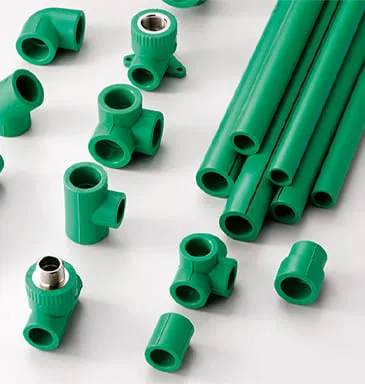
PPR pipes are made from a high-quality plastic material known as polypropylene random copolymer. This material is favoured for its resistance to high temperatures, corrosion, and chemical reactions, making it ideal for plumbing applications. PPR fittings are used to connect the pipes in various configurations, allowing the creation of intricate plumbing systems that can handle high pressure and temperature.

PPR pipes are commonly used in both hot and cold water systems, underfloor heating, and industrial fluid transportation. These pipes are also used in agricultural systems and in applications where water purity is crucial, such as in healthcare facilities.

Key Services

PPR piping systems deliver reliable performance across critical applications where traditional metal pipes fail due to corrosion, scaling, or chemical attack.

Safe and hygienic transportation of drinking water in residential, commercial, and institutional buildings — completely non-toxic and compliant with international potable water standards 

Reliable hot water supply up to 95°C continuous operation, ideal for hotels, hospitals, apartment complexes, and industrial facilities requiring consistent hot water delivery.

Efficient distribution for radiant floor heating, radiator circuits, and district heating networks with excellent thermal insulation properties that reduce heat loss.

Chemical-resistant piping for industrial process water, cooling circuits, and fluid handling where corrosion resistance and durability are essential.

Why Choose PPR Pipes & Fittings

PPR piping systems outperform traditional materials across every critical performance metric, delivering long-term reliability and lower total cost of ownership.

01

Non-Toxic & Safe for Drinking Water

PPR is absolutely free from corrosion and negative biological effects. It does not break down even under the harshest water conditions; hence the quality of water never deteriorates. It is in full compliance with international standards for plastics used in potable water transportation.

02

Leak-Proof Fusion Joints

The joints are made by a fusion process using a polyfusion device. This process gives homogeneous, integral, and watertight joints that last for a long time — eliminating the risk of leaks at connection points.

03

Excellent Corrosion & Chemical Resistance

PPR pipes and fittings are stable against the majority of known aggressive and toxic chemicals, aggressive soils, and fluids in the external environment — ensuring long-term integrity in demanding conditions.

01

Smooth Bore for Maximum Flow

The mirror-smooth inside surface ensures reduced head loss, high flow rates, and very low frictional losses — resulting in lower pumping energy requirements and operational cost savings.

02

Trusted Specialist

PPR piping systems are engineered by specialists with decades of experience in thermoplastic piping technology. The material has been in use for more than 30 years in Europe, the Gulf, China, and Russia and has gained excellent acceptance across the world.

03

Quality Materials

PPR pipes and fittings are manufactured using premium PP-R (Type 3) or PP-RCT (Type 4) raw materials from approved global suppliers. Every production batch undergoes rigorous quality testing to ensure compliance with international standards including ISO 15874, DIN 8077/8078, and EN 1452.

Key Features & Benefits

FeatureBenefit
PP-R / PP-RCT Polymer TechnologySuperior long-term heat resistance and creep resistance for 50+ years of reliable service 
Temperature Range -20°C to 95°CSingle system handles both cold and hot water applications 
Pressure Rating up to PN 20 / PN 25Suitable for high-pressure plumbing systems up to 20-25 bar 
100% Corrosion ResistantNo rust, no scaling, no pitting — eliminates maintenance costs 
Mirror Smooth Inner Bore (C=150)Maximum flow rate with minimum pumping energy — reduced operational costs 
Heat Fusion JointsLeak-proof connections as strong as the pipe itself — no gaskets, no sealants, no leaks 
Low Thermal Conductivity (0.23 W/mK)Reduces heat loss in hot water systems — saves insulation costs and energy 
Lightweight Construction1/6th the weight of steel — lower transport, handling, and installation costs 
Free from ScalingLimestone or other deposits cannot form — no blockage or flow reduction over time 
Low Noise TransmissionSound-dampening property provides quiet operation in plumbing and pressurized flow applications 
UV StabilizedSuitable for outdoor installation with protection against solar degradation 
Impact ResistantHigh impact strength eliminates possibility of breakage during handling and service 

Applications

IndustryApplication
ResidentialHot and cold water supply, underfloor heating, radiator connections
CommercialHotels, hospitals, schools, shopping malls — plumbing and HVAC systems 
IndustrialChemical transfer lines, compressed air, process water, industrial fluids 
HVAC & RefrigerationChilled water, condenser water, heating hot water systems 
Solar ThermalCollector circuits, storage tank connections — high temperature tolerance
Radiant HeatingUnderfloor and wall heating systems — low thermal expansion, even heat distribution
AgricultureIrrigation supply lines, greenhouse heating, water distribution networks
Swimming PoolsFiltration and heating circuits — chemical resistance to chlorine

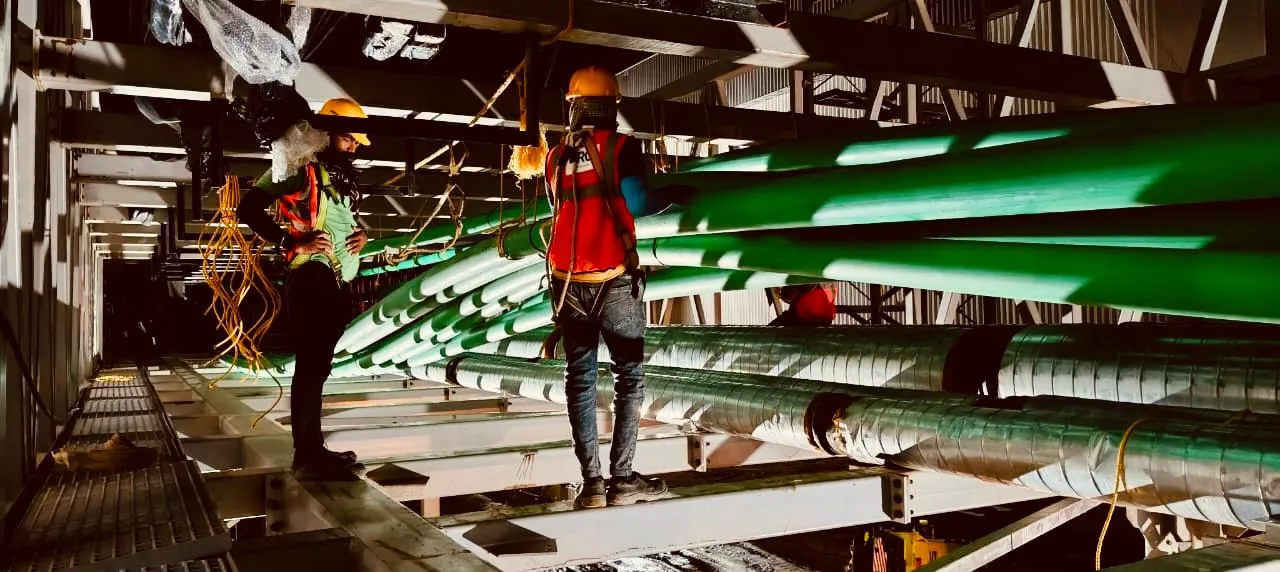
Showcasing Excellence in Every Build

We take pride in delivering construction projects that stand strong for generations. Explore some of our featured works below.

Technical Specifications

SpecificationValue
MaterialPP-R (Polypropylene Random Copolymer Type 3) / PP-RCT (Type 4)
Density0.90 – 0.91 g/cm³ 
Operating Temperature-20°C to +95°C (continuous) 
Maximum Short-Term Temperature110°C
Pressure RatingsPN 10, PN 16, PN 20, PN 25
Size Range16mm to 200mm OD 
Thermal Expansion Coefficient0.15 mm/m°C (uniform pipes); 0.03-0.05 mm/m°C (multilayer reinforced pipes) 
Thermal Conductivity0.23 – 0.24 W/mK 
Hazen-Williams C-Value150
Modulus of Elasticity (20°C)800 – 900 N/mm² 
Tensile Strength (Yield at 23°C)25 N/mm²
Impact Strength (Charpy, 23°C)20 kJ/m² 
Water Absorption< 0.1% 
Limiting Oxygen Index (LOI)19% 
Joining MethodsSocket Fusion, Butt Fusion, Electrofusion
ColorWhite, Green, or Grey

Dimensional Range (PN 20 / SDR 6)

Nominal OD (mm)Wall Thickness (mm)Inner Diameter (mm)Weight (kg/m)
162.710.60.110
203.413.20.172
254.216.60.266
325.421.20.370
406.726.60.575
508.333.40.896
6310.542.01.410
7512.550.02.010
9015.060.02.870
11018.373.44.300

PPR Fittings Range

Standard Fitting Types

Fitting TypeDescriptionTypical Applications
Coupler / SocketConnects two pipe ends in straight lineExtending pipe runs, repairs
Elbow / BendChanges direction of flow (45° or 90°)Corner connections, wall transitions
TeeCreates branch from main lineSupply line branches
ReducerConnects pipes of different diametersSize transitions
End CapSeals the end of a pipeTemporary closures, dead ends
UnionAllows pipe disconnection for maintenanceEquipment connections, service points
Ball ValveFull-port isolation valveFlow control, shut-off points
Female / Male Thread AdapterTransition to metal threaded connectionsConnections to existing metal piping, equipment
Flange AdapterFor bolted connections to valves/pumpsLarge diameter connections, equipment isolation

Material Specifications

  • Full-plastic fittings made from PP-R Type 3 raw material 

  • Metal inserts are non-coated brass alloy suitable for drinking water applications

  • Compliance with EN ISO 15874-3 standards

Pressure-Temperature Rating (PN 20 System)

Temperature (°C)Working Pressure (bar)Pressure Rating (% of 20°C)
2020.0100%
4015.879%
6012.663%
709.849%
807.839%
906.231%
955.025%
John Peterson
John Peterson

Real Estate Developer

“This company transformed our vision into reality. The project was completed ahead of schedule with outstanding quality. Their team is professional, reliable, and truly committed to excellence.”

Emily Carter
Emily Carter

Homeowner

“I couldn’t be happier with the renovation of my home. From design to finishing, every detail was handled with care. They exceeded my expectations in every way.”

Michael Rodriguez
Michael Rodriguez

Commercial Property Owner

“We hired them for our office construction, and the results were impressive. They delivered on time, stayed within budget, and the craftsmanship was top-notch. Highly recommended!”

Sophia Williams
Sophia Williams

Interior Designer Partner

“As a design partner, I’ve collaborated with many contractors, but this team stands out for their professionalism and ability to bring creative ideas to life. A trusted partner for future projects.”

David Brown
David Brown

Manufacturing Facility Owner

“Our factory expansion project was a success thanks to their expertise. They handled everything from planning to execution seamlessly. I’m impressed with their efficiency and attention to detail.”

What Our Clients Say

We take pride in delivering water solutions that exceed expectations. Here’s what our clients have to say about working with us.

27k Statified Our Client

TESTIMONIALS

Frequently Asked Questions

PPR (Polypropylene Random Copolymer) pipes and fittings are plumbing components designed for hot and cold water distribution systems. They are known for their durability, corrosion resistance, and long service life.

PPR pipes are widely used in residential, commercial, and industrial applications, including potable water supply, hot and cold water systems, HVAC installations, and compressed air systems.

PPR pipes offer excellent corrosion resistance, smooth internal surfaces for better water flow, leak-proof joints, thermal insulation properties, and low maintenance requirements.

Yes. PPR pipes are designed to handle both hot and cold water systems and can withstand elevated temperatures when installed according to recommended specifications.

PPR pipes and fittings are joined using a heat fusion welding process, creating a strong and leak-resistant connection that becomes a single integrated unit.

Yes. High-quality PPR pipes are manufactured from non-toxic materials and are suitable for potable water applications when they comply with relevant standards.

No. PPR pipes are highly resistant to corrosion, rust, and scale buildup, making them a reliable choice for long-term plumbing installations.

Under normal operating conditions and proper installation, PPR piping systems can provide reliable performance for several decades.

Yes. PPR piping systems are suitable for various industrial applications, including process water transport, compressed air systems, and certain chemical transfer applications.

PPR pipes offer good resistance to many chemicals and aggressive substances. Compatibility should always be verified based on the specific chemical and operating conditions.

PPR pipes and fittings are available in a wide range of diameters to accommodate different plumbing and industrial requirements.

PPR pipes can be installed outdoors, but prolonged exposure to direct UV radiation may require protective insulation or covering to maintain long-term performance.

Yes. PPR material has low thermal conductivity, which helps reduce heat loss in hot water systems and contributes to improved energy efficiency.

PPR piping systems generally require minimal maintenance due to their corrosion resistance and durable construction.

Selection depends on factors such as operating pressure, temperature requirements, flow capacity, application type, and installation environment. Reviewing technical specifications can help determine the most suitable option.

Let’s Build Reliable Water Solutions for Every Project.